



Abstract:
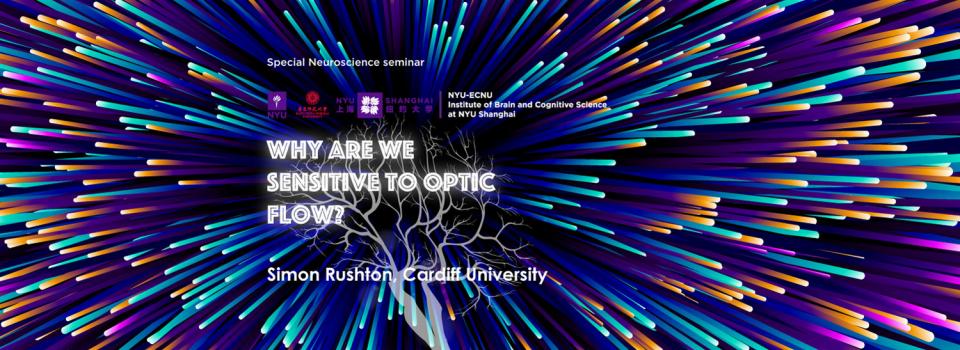
In science fiction movies the movement of stars seen from inside the spaceship gives the viewer a vivid sensation of forward movement. The movement of the stars creates “optic flow”, a pattern of image motion that we experience whenever we move. The human brain is exquisitely sensitive to optic flow.
Why are we so sensitive to optic flow? The standard answer is that we use it to guide locomotion, an intuitive idea that originated with Grindley in the 40s and was popularised by Gibson. In early work, I challenged this idea and suggested that humans use the egocentric direction of the target to guide locomotion. More recently, with colleagues, I have been looking at the role of “allocentric location” cues in guiding locomotion in enclosed spaces. This work further chips away at the standard optic flow story. With Paul Warren I put forward an alternative suggestion for why we are sensitive to optic flow - to help in the identification of object movement during self-movement (“flow-parsing”). Recently I’ve been considering the possibility that optic flow processing underpins perceptual stability – the way the brain is able to turn continually changing retinal input into the percept of an unchanging stable environment.
In this talk I won’t provide any definitive answers as to why we are sensitive to optic flow, but I will try to outline some potential answers.
Sponsored by the NYU-ECNU Institute of Brain and Cognitive Science at NYU Shanghai